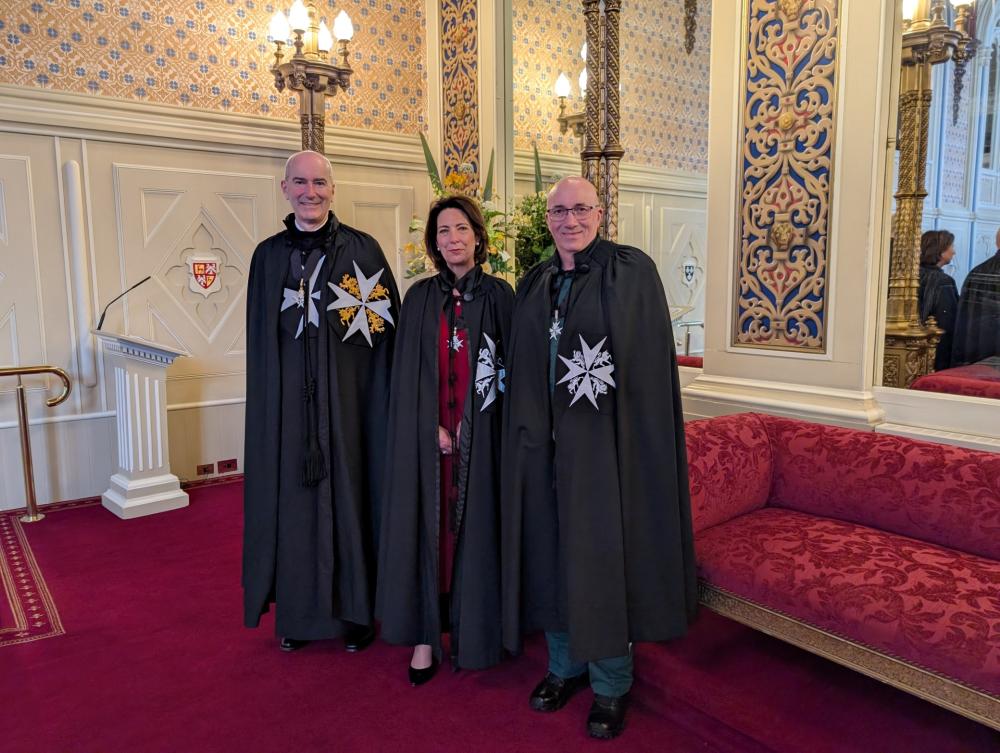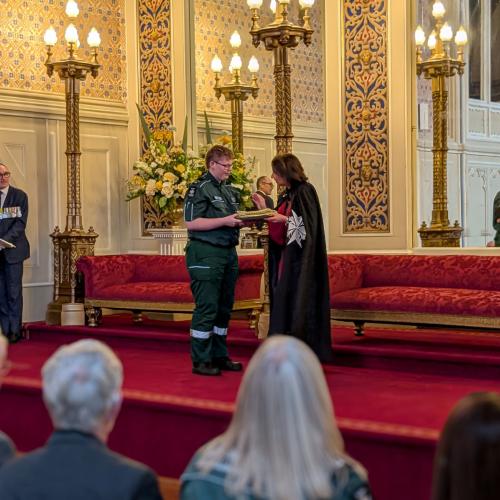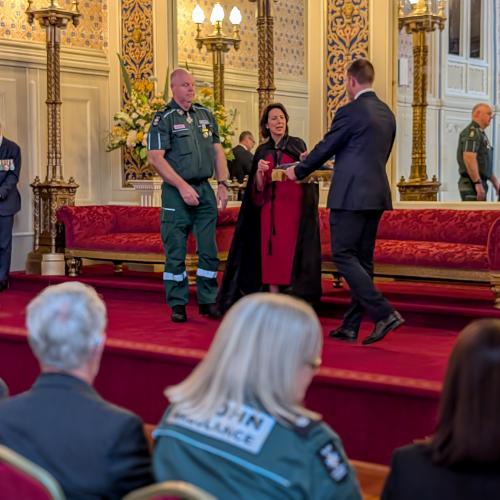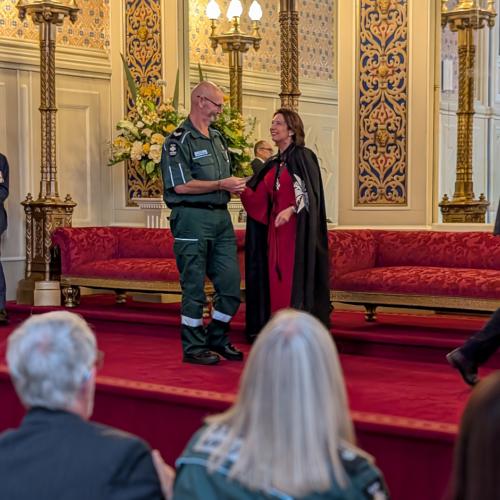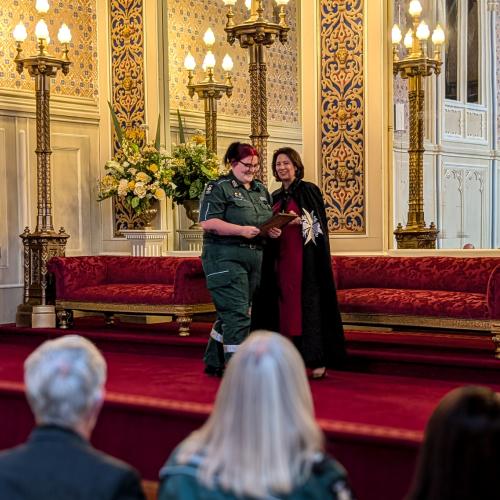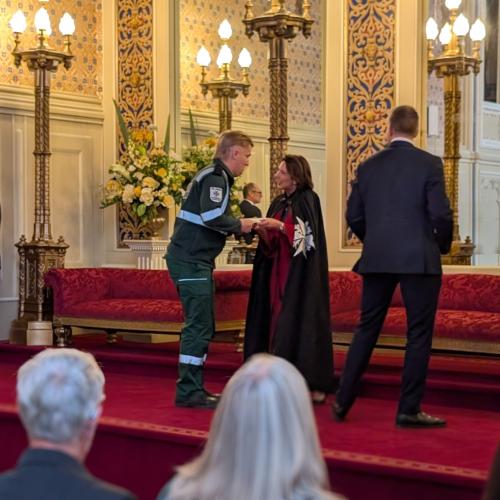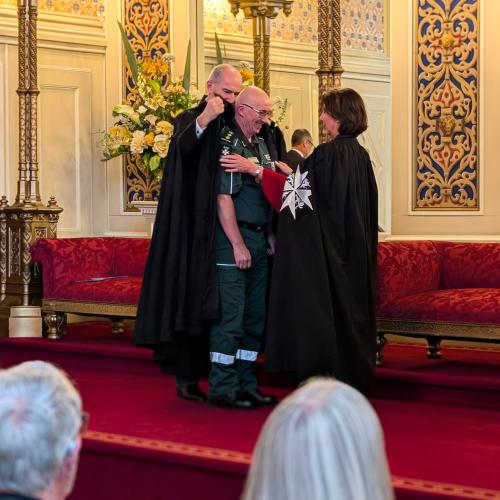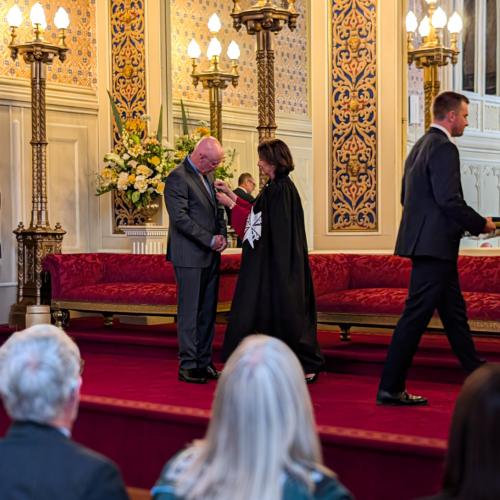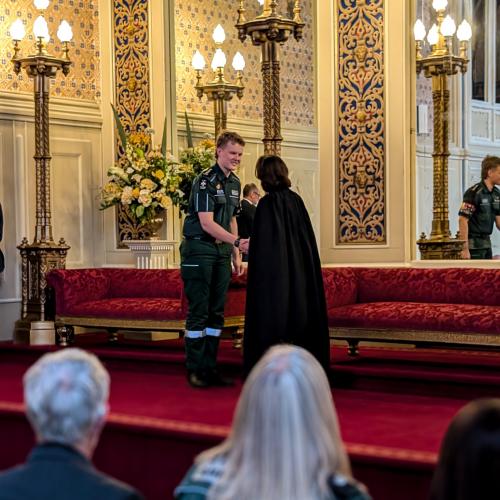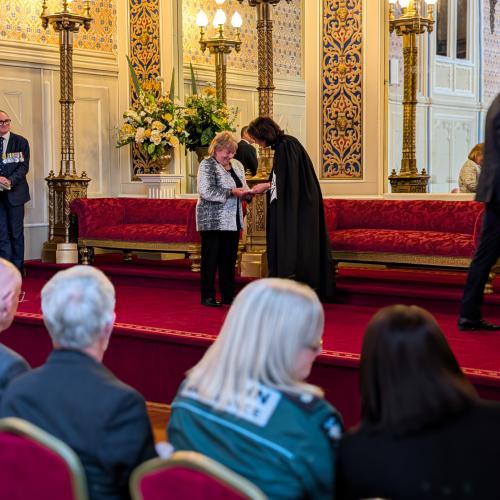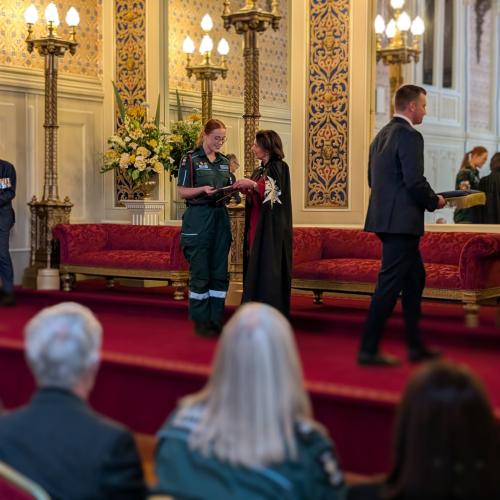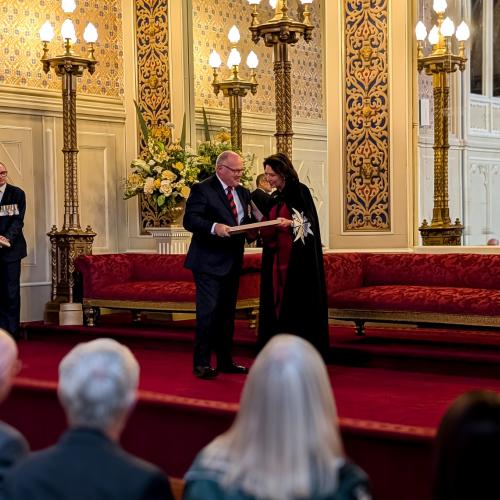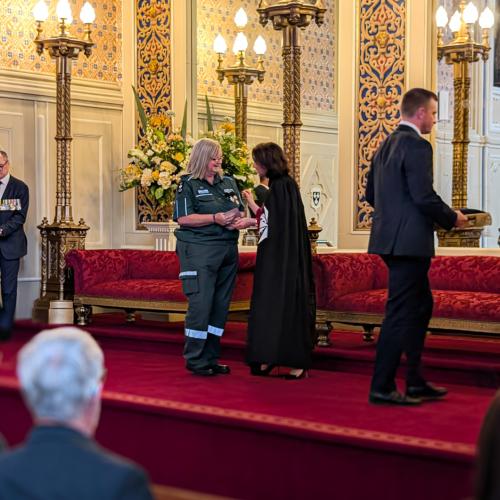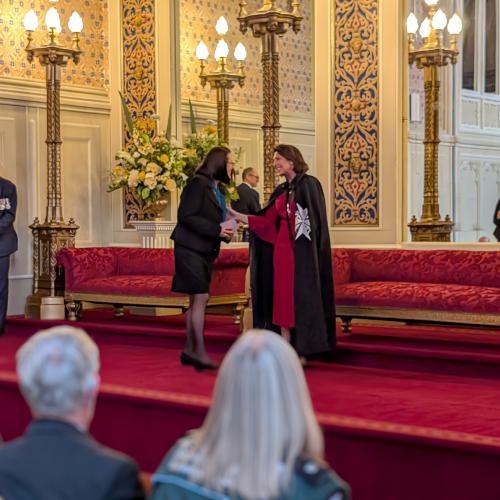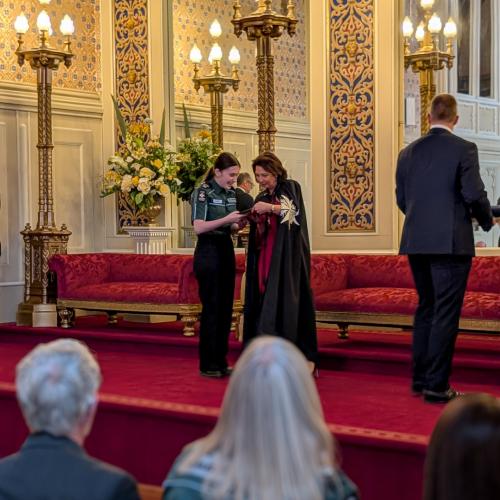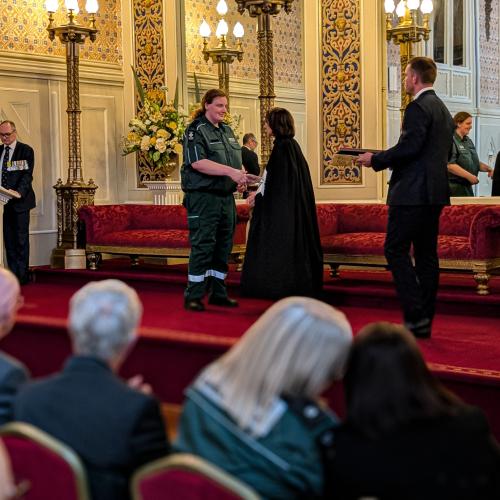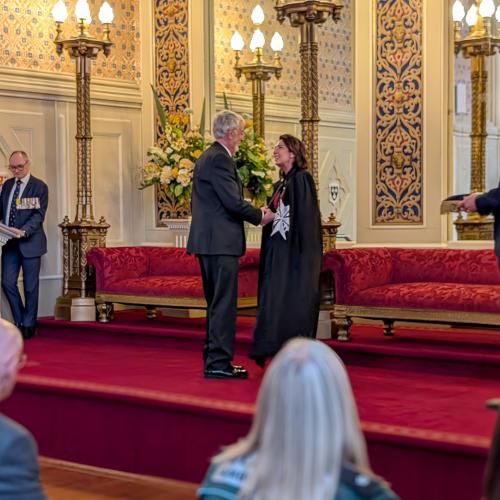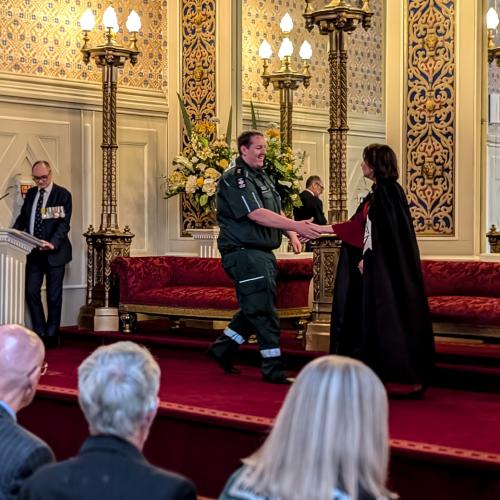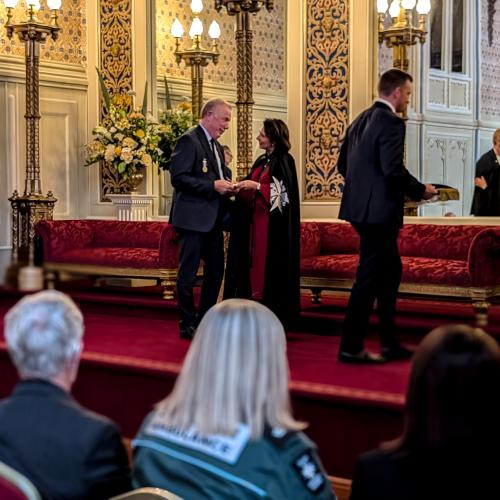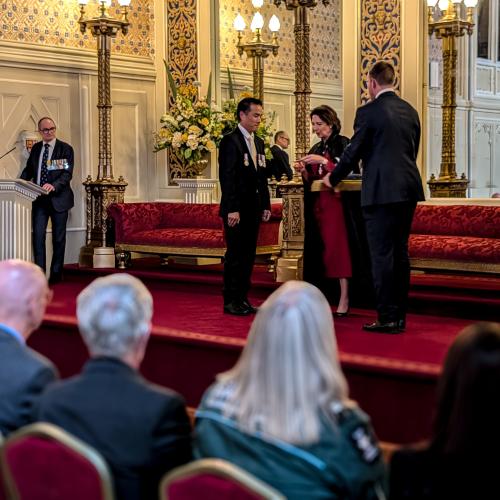
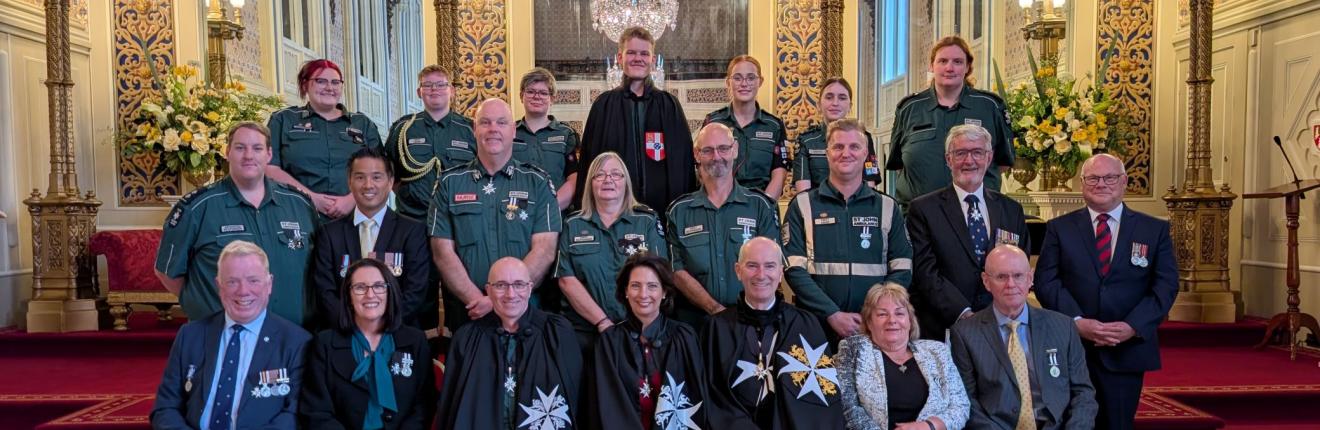
From Cadets receiving one of St John’s highest youth honours to volunteers recognised for 45 years of service, there was much to celebrate when the St John Tasmania community gathered at Government House Tasmania for its 2026 Investiture.
The ceremony recognised people at many different stages of their St John journey. Four Cadets received the Grand Prior’s Badge, the highest award a Cadet in the St John Ambulance Youth Programme can achieve, while other recipients were honoured for voluntary service spanning 10 to 45 years. Scott McCarthy was also promoted to Commander of the Order of St John in recognition of more than 30 years of service and leadership within St John Event Health Services.
Tasmania’s new Governor and Deputy Prior of the Order of St John in Tasmania, Her Excellency the Honourable Caroline Wells, also spoke fondly about being a St John Cadet.
It created a meaningful link between generations: a former Cadet now serving as Tasmania’s Governor and Deputy Prior, alongside another generation of young Tasmanians receiving their own Grand Prior’s Badges.
The ceremony was distinctly modern and Tasmanian, but the tradition behind it stretches back more than 900 years.
A story that began with care
The story of St John can be traced to a hospice established in Jerusalem around 1070. The hospice cared for sick and injured pilgrims travelling to the Holy Land, regardless of their faith.
Dedicated to St John the Baptist, the hospital was formally recognised as a religious Order in 1113. Its members became known for caring for people who were poor, sick or injured during a time when undertaking such a journey could be dangerous.
Over time, the Order assumed both charitable and protective roles. Following the loss of Jerusalem in 1187, it established headquarters in Acre, then Cyprus and Rhodes, before settling in Malta in 1530. It remained there until 1798.
Although the Order was suppressed in England during the Reformation, its charitable ideals endured. A revived British Order emerged in the 19th century with a renewed focus on humanitarian service.
From ancient ideals to modern first aid
By the late 19th century, the Order’s commitment to caring for others was taking a form that would be more recognisable to us today.
St John Ambulance was established in 1877 to provide first aid training. In 1882, the Order established the St John Ophthalmic Hospital in Jerusalem, continuing the tradition of providing care in the place where its story began.
Then, in 1887, volunteers were organised into a uniformed Brigade to provide first aid at public events. This was the beginning of a service that remains central to St John today, with trained volunteers continuing to support events and communities around the world.
In 1888, Queen Victoria granted the Order a Royal Charter, formally establishing it as a Royal Order of Chivalry. Today, King Charles III is Sovereign Head of the Order.
While its ceremonial traditions reflect this long history, the Order remains a working humanitarian organisation. St John now operates across more than 30 countries, supporting health, resilience and community service around the world.
Its two mottos are Pro Fide and Pro Utilitate Hominum, meaning “For the Faith” and “In the Service of Humanity.” The second captures the practical purpose that continues to connect the modern organisation with its earliest beginnings.
The meaning behind the St John cross
The familiar eight-pointed St John cross also carries centuries of history.
Known as the Amalfi or Maltese Cross, the symbol dates back to the 11th century. Its four arms represent the virtues of prudence, justice, temperance and fortitude.
The eight points represent qualities expected of members of the Order: humility, sympathy, gentleness, truth, compassion, unselfishness, peace and endurance. The lion and unicorn were added when the Order became a Royal Order of Chivalry in 1888.
These qualities are not simply historical ideas. They remain reflected in the service, leadership and care recognised through the Order today.
Why does St John hold an Investiture?
An Investiture is a formal ceremony at which new members are welcomed into the Order and existing members are promoted in recognition of notable and committed service.
In Australia, Investitures are generally held each year at Government House and conducted by the Deputy Prior in each state. They maintain the historic traditions of the Order while recognising people whose actions reflect its modern humanitarian purpose.
The ceremony also provides a fitting setting in which to present other St John honours and awards, including long-service medals, commendations and the Grand Prior’s Badge.
The Service Medal of the Order recognises 10 years of qualifying voluntary service, with a clasp awarded for each additional five years. It forms part of the Australian Honours and Awards System.
The Grand Prior’s Badge recognises a Cadet’s sustained commitment, compassion and service. It is awarded internationally and is the highest award a Cadet in the St John Ambulance Youth Programme can achieve.
Continuing the story in Tasmania
The honours presented at the 2026 Tasmanian Investiture reflected the many different ways people contribute to St John.
Scott McCarthy was promoted to Commander of the Order following more than three decades of service. His contribution has included strengthening clinical standards, volunteer development, accreditation and safe service delivery across Event Health Services and community-based patient transport.
Long-service recipients were recognised for milestones ranging from 10 to 45 years, while awards and commendations acknowledged achievement, leadership and devotion to duty.
Four Cadets, Sasha Barker, Jack Duncan, Lauren Hughes-Kitto and Laura O’Reilly, received the Grand Prior’s Certificate and Badge.
Together, the recipients represented both the breadth of St John’s work and the strength of the commitment behind it.