
From first aid kits to portable AEDs: taking emergency preparedness into Tasmania’s wilderness
When you’re heading into the Tasmanian wilderness, there are a few essentials you expect to pack: wet weather gear, a first aid kit, an emergency beacon.
Now, for guides from Tasmanian Walking Company, that kit also includes a portable defibrillator.
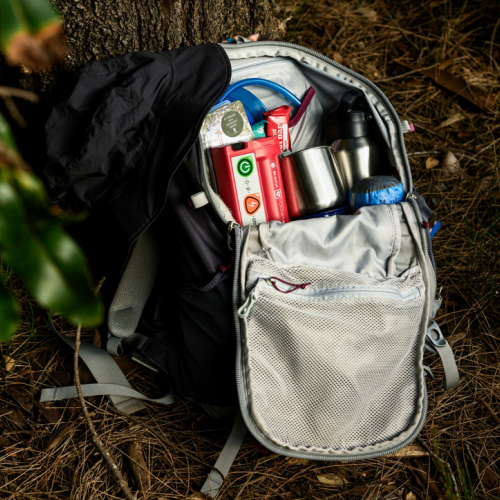
Tasmanian Walking Company has introduced St John Pocket AEDs to support emergency preparedness across its guided walks, giving its teams access to a defibrillator that can travel with them into remote parts of Tasmania.
It is a simple idea, but an important one. Instead of relying on someone being close to a fixed AED, the defibrillator goes where the people go.
What happens when the nearest AED is kilometres away?
Most of us are used to seeing automated external defibrillators, or AEDs, mounted on the wall at airports, shopping centres, workplaces and sporting facilities.
But cardiac arrest does not only happen in convenient places.
That presents a particular challenge in Tasmania, where being outdoors can mean being many kilometres from roads, towns and traditional emergency infrastructure. As Matt Brocklehurst, CEO of St John Tasmania, explained:
“What makes the Pocket AED concept so useful in environments like these is that instead of asking people to find the defibrillator, the defibrillator travels with them.”
For a walking company taking visitors into remote wilderness, there is a practical logic to carrying an AED alongside other emergency equipment.
Heath Garratt, Head of Delivery at Tasmanian Walking Company, said Tasmania’s remoteness is part of what makes the experience so special, but it also means emergency help may not always be close at hand.
“In the wilderness, help can be hours away. Having a defibrillator on hand could save a life.”
How confident are Tasmanians around defibrillators?
The initiative comes as new research commissioned by St John Tasmania highlights a gap between AED awareness, accessibility and confidence.
The 2026 research found 82% of Tasmanians could not say with certainty where their nearest AED was located and only 48% felt confident using an AED during a cardiac arrest.
It also found confidence was considerably higher among people with recent first aid or CPR training: 69% of people trained within the past three years felt confident using an AED, compared with 28% of those without recent training.
That raises an important question for all of us: if someone experienced a cardiac arrest where you work, visit or spend time, how quickly could you access an AED?
Thinking beyond the AED on the wall
A portable AED opens up possibilities in places where a permanently installed defibrillator may not be practical.
For tourism operators, outdoor workplaces, community organisations and people spending time in more remote areas, emergency preparedness is not just about having equipment somewhere. It is about whether that equipment can actually be accessed where and when it is needed.
That is what makes Tasmanian Walking Company's approach interesting.
The company has taken a familiar piece of emergency equipment and adapted the way it uses it to suit the environment in which its guides and guests actually operate.
As Matt Brocklehurst put it:
“This isn’t about ticking a compliance box. It’s about asking a very practical question: if somebody experiences a cardiac arrest here, what equipment would we want available in those first critical minutes?”
Sometimes being better prepared does not mean making things more complicated. It simply means thinking about where people actually are when an emergency might happen.
Want to learn more about the St John Pocket AED, AEDs for your workplace or organisation, or first aid and CPR training? Get in touch with St John Tasmania.