
From Trotting Horses to CPR: The History of CPR

From Trotting Horses to CPR: How First Aid Evolved and the Role of St John

Each year on 24 June, St John organisations around the world celebrate St John Day, recognising a legacy of service that spans more than 900 years. It is an opportunity to reflect on the people, innovations and acts of care that have shaped one of the world's oldest humanitarian organisations.

When most people think of St John today, they think of first aid, CPR and volunteers supporting their communities. But the history of resuscitation is far older—and considerably stranger—than many realise.

Today, CPR is recognised around the world as one of the most effective emergency interventions available to ordinary people. Every year, millions of people learn cardiopulmonary resuscitation (CPR), and countless lives are saved because someone nearby knew what to do.

Yet CPR is remarkably young.

The technique taught in first aid courses today was only formalised in 1960. Before then, generations of rescuers experimented with a wide range of methods in an attempt to revive people who had stopped breathing or appeared to have drowned. Some of these techniques were innovative for their time. Others seem rather unusual through a modern lens.

Throughout this period of discovery, one organisation remained committed to a simple idea: that ordinary people can learn the skills needed to help others in an emergency. That organisation was St John.
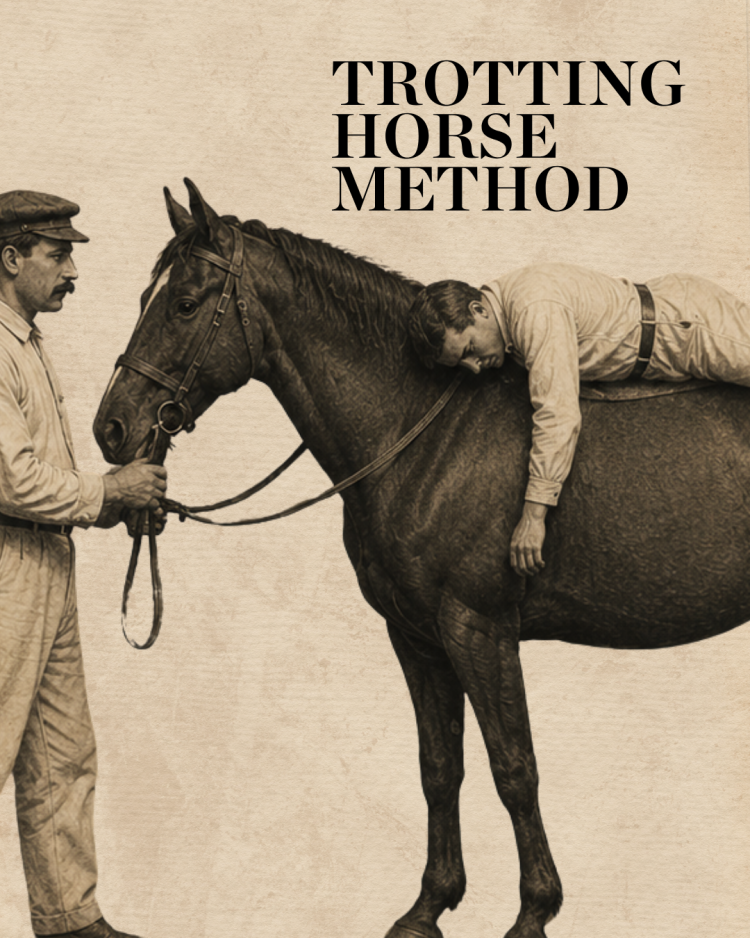
Drowning victims were placed face-down across a horse and taken for a trot along the beach in the belief that the movement would stimulate breathing.

Before CPR: A History of Trial and Error

For much of history, there was little understanding of how the lungs, heart and circulatory system worked together. As a result, early resuscitation techniques often focused on restoring breathing through physical movement, pressure or stimulation.

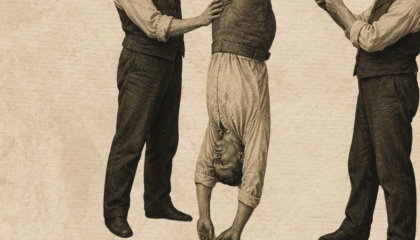
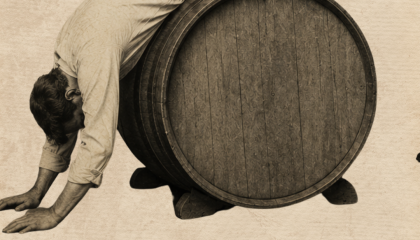
In the eighteenth century, the Inversion Method was commonly used for drowning victims. Patients were suspended upside down in an attempt to drain water from the lungs and restore breathing. Around the same time, the Barrel Method involved rolling a casualty over a barrel to compress and expand the chest.

Another technique, the Trotting Horse Method, saw drowning victims placed face-down across a horse and transported at a trot, with the movement believed to stimulate respiration.

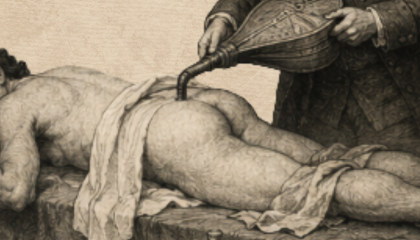
Perhaps the most infamous was Tobacco Fumigation, first documented in the early 1700s. In an attempt to revive drowning victims, tobacco smoke was blown into the rectum using a bellows or bladder. The practice was widely accepted for a period and even became part of official resuscitation kits positioned along some waterways.

While these methods may seem strange today, they represented genuine attempts to understand how life might be restored after apparent death.

person lying over a wine barrel in early CPR technique

The Barrel Method

person being hung by their ankles in early CPR technique

The Inversion Method

picture of a doctor blowing smoke into the rectum of a patient.

The Fumigation Method

The Origins of St John

The story of St John stretches back far beyond the invention of CPR.

The Order of St John traces its roots to a hospital established in Jerusalem around 1070 to care for sick and injured pilgrims. The Hospitallers, as they became known, provided care regardless of faith, nationality or status. Over the centuries, the Order evolved, but its commitment to caring for the sick and vulnerable remained constant.

The modern St John movement emerged during the Industrial Revolution. As mines, factories and railways expanded across Britain, workplace injuries became increasingly common and there was a growing need for practical first aid knowledge.

In 1877, the St John Ambulance Association was established to teach first aid to industrial workers and members of the public. Ten years later, in 1887, trained volunteers were organised into the St John Ambulance Brigade, providing first aid and ambulance services at public events and within communities.

For many communities, St John volunteers became the first organised providers of emergency medical assistance available outside hospitals.

The Birth of Modern CPR

The path to modern CPR took centuries of experimentation.

Mouth-to-mouth resuscitation had been documented as early as the 1700s, while various chest-compression techniques were explored throughout the nineteenth century. However, it was not until the mid-twentieth century that researchers began to understand how these elements could work together.

In 1960, researchers including Dr James Jude, Dr William Kouwenhoven and Dr Peter Safar successfully combined mouth-to-mouth breathing with external chest compressions to create modern cardiopulmonary resuscitation. For the first time, there was a scientifically validated method that ordinary people could learn and perform effectively.

The impact was revolutionary.

Over the following decades, CPR training spread rapidly throughout the world. Research continued to refine techniques, and the introduction of Automated External Defibrillators (AEDs) further improved survival outcomes for people experiencing sudden cardiac arrest.

Modern first aid became increasingly evidence-based, with international guidelines regularly updated as new research emerged.

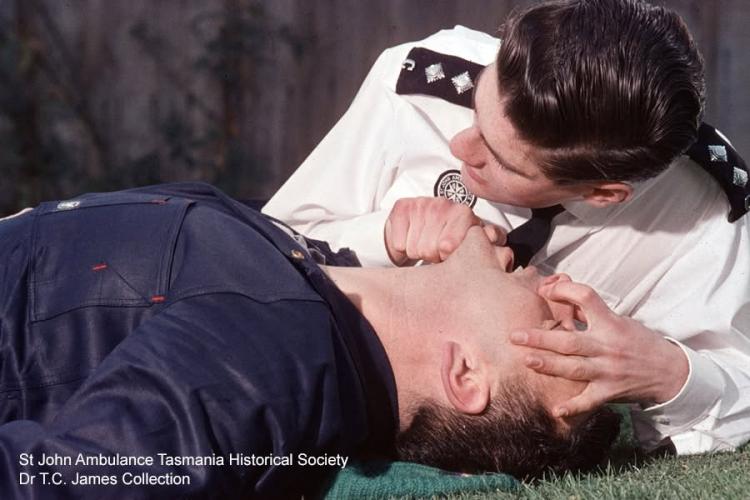
A 1970's picture of St John Tasmania volunteer performing CPR

St John and First Aid Education

As first aid knowledge evolved, St John evolved with it.

For more than 140 years, St John organisations around the world have adapted their training programs to reflect the latest medical evidence. From industrial first aid classes in Victorian Britain to modern CPR and AED training, St John has helped generations of people gain the confidence to act in an emergency.

Today, St John operates in more than 40 countries and is supported by approximately 200,000 volunteers worldwide. While the techniques taught have changed dramatically over time, the underlying mission has remained remarkably consistent: helping people help others.

St John in Australia

The St John movement arrived in Australia in the late nineteenth century, bringing structured first aid education and volunteer ambulance services to communities across the country.

Throughout the twentieth century, St John volunteers provided first aid at public events, supported communities during emergencies and disasters, and trained Australians in life-saving skills. As medical knowledge advanced, St John played an important role in ensuring those advances reached workplaces, schools and local communities.

Today, St John organisations continue to provide first aid training, event health services, community education programs and volunteer opportunities across Australia.

More Than a Century of Service in Tasmania

St John Ambulance Tasmania has a rich history of public service dating back to 1887, when its first training centre was established in Launceston.

Over the decades, St John Tasmania has grown alongside the communities it serves. Volunteers have supported public events, emergencies and community initiatives across the state, while generations of Tasmanians have learned life-saving skills through St John first aid courses.

Today, St John Tasmania delivers first aid training, event health services, community programs, patient transport and emergency response capabilities across the state. While the equipment, uniforms and techniques may have changed dramatically since those early days, the commitment to helping Tasmanians remains unchanged.

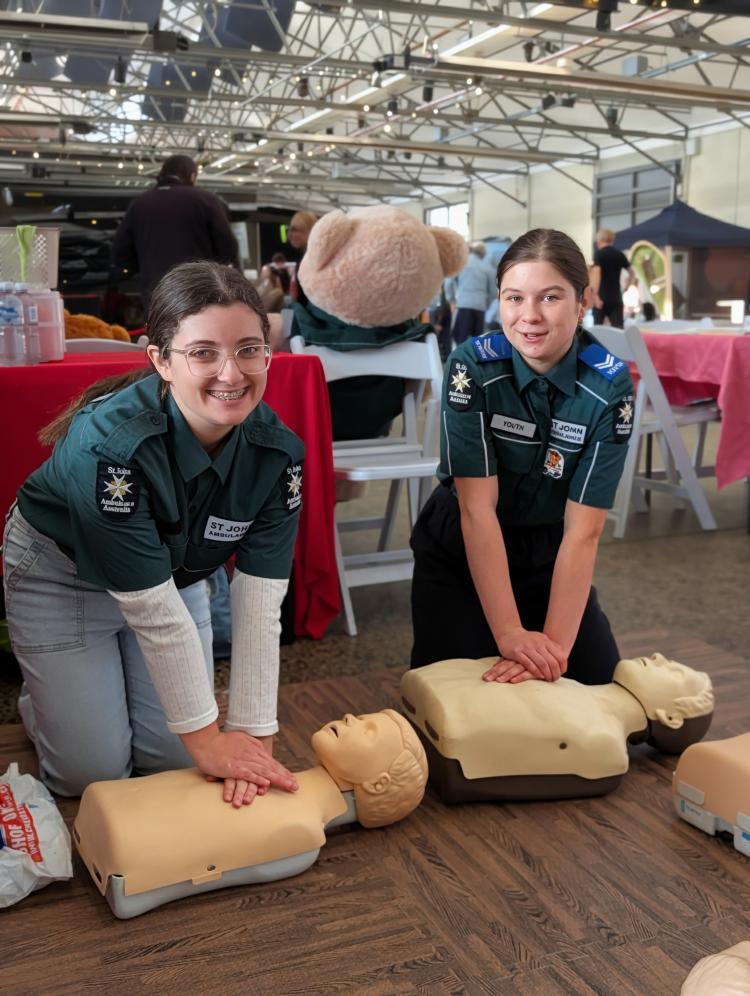
St John Youth Members practicing CPR

Different Methods. Same Mission.

The history of first aid is filled with fascinating ideas, surprising experiments and continual learning.

Thankfully, we no longer rely on barrels, trotting horses or tobacco smoke.

What has endured is the belief that ordinary people can make an extraordinary difference when they have the right knowledge and confidence.

For more than 140 years, St John has helped equip communities with those skills. The science has changed, but the mission remains the same: helping save lives through first aid education, volunteer service and community care.

Interested in learning more about St John Tasmania's history? Our Historical Museum in Hobart houses a remarkable collection of artefacts, photographs and stories that showcase more than a century of service to the Tasmanian community.